Basic Information
| Field | Details |
|---|---|
| Full Name | Dr Michelle Oakley |
| Known For | Veterinarian, television personality, wildlife medicine expert |
| Best Known Series | Dr. Oakley, Yukon Vet |
| Birthplace | Munster, Indiana |
| Education | University of Michigan, zoology; Atlantic Veterinary College, DVM in 2000 |
| Profession | Veterinarian |
| Husband | Shane Oakley |
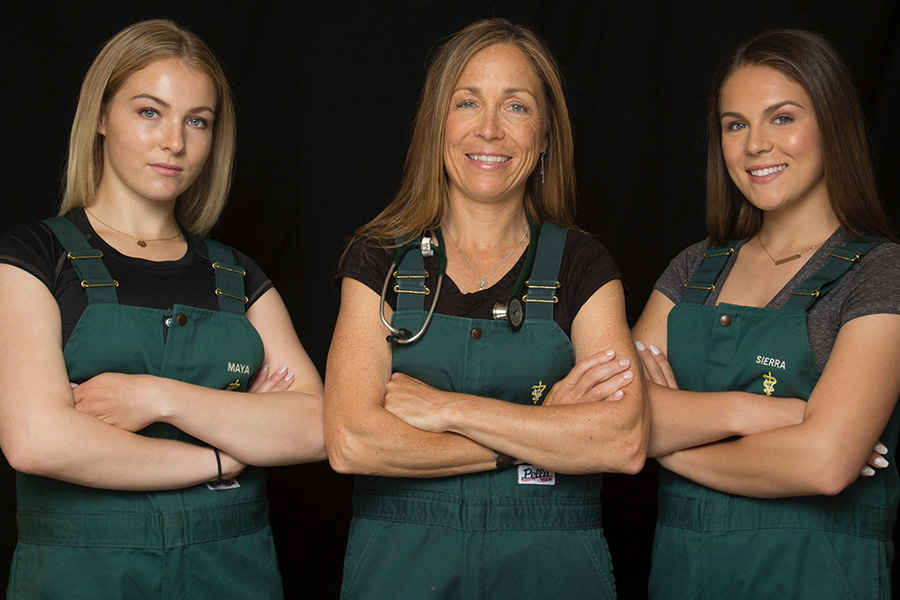
| Children | Sierra Oakley, Maya Oakley, Willow Oakley |
| Parents | Georgia Plantinga, Steve Plantinga |
| Home Base | Yukon and Alaska |
A Life Shaped by Animals and Distance
I think Dr. Michelle Oakley works outside the box. She belongs. Famous for her helicopter rescues on freezing roads, her narrative begins elsewhere. In Munster, Indiana, she developed an early passion of animals. Meeting Jane Goodall at 11 was one of those life-changing occasions. She appears fired up since that time. No fading occurred. It grew.
After studying zoology at Michigan, she graduated from Atlantic Veterinary College in 2000. Those years provided her more than credentials. She received a lens. She learned that animals are connected to geography, weather, need, and survival. That strategy underpinned everything she built subsequently.
The Vet Who Chose the Hard Road
I think one reason Dr Michelle Oakley stands out is that she chose the hard road on purpose. She did not settle for a comfortable office where the same kinds of cases came through a predictable door. She went north, where the distance is real, the weather can bite like glass, and every case can demand improvisation. Her career in Yukon and Alaska became a kind of frontier medicine.
She worked first with Yukon Fish & Wildlife, then spent years as a government vet before building her own practice in Haines Junction. Over time, she became known for treating almost anything with a pulse. Dogs, cats, cows, horses, birds, wildlife, all of them have crossed her path. That range matters. It tells me she is not only a doctor but a translator between species and between human need and animal need.
Her television series, Dr. Oakley, Yukon Vet, brought that world into homes far beyond the North. The show made her work visible, but it did not manufacture her reputation. It simply opened a window. What people saw was a veterinarian moving through snow, mud, wind, and long stretches of uncertainty with a calm that feels almost geological. She does not rush like a storm. She endures like stone.
A Career Built on Service and Adaptability
Dr Michelle Oakley’s career is full of practical achievements, but it also carries symbolic weight. She became the only veterinary option for a huge remote region, and that alone says a great deal. In places like that, a vet is not just a clinician. She is a lifeline. She is often the difference between panic and action.
Her work has included herd medicine, wildlife care, emergency procedures, and field treatment in conditions that would intimidate most people before lunch. She has been publicly associated with major wildlife organizations and conservation spaces, and she has also earned broader recognition outside veterinary circles. In 2019, she was named to InStyle’s Badass 50 Women list, a title that fits her unusually well. It sounds flashy at first, but it makes sense. She has built a career around courage that is practical, not performative.
I also think her brand growth is worth noting. The Dr. Oakley Wilderness Vet name shows that her work has moved beyond a TV series and into a recognizable public identity. That kind of expansion usually happens only when there is a real story beneath the surface. Hers is a story of competence under pressure.
Shane Oakley, the Family Foundation, and a Shared Life
Family is not a side note in Dr Michelle Oakley’s story. It is part of the structure. Her husband, Shane Oakley, is often described as a firefighter, and the two seem to have built a life that balances intensity with stability. That balance matters. A life in remote veterinary medicine can be punishing. It asks for flexibility, patience, and a thick skin. Having a spouse who understands hard work and public life appears to have helped hold the center.
I find that her family life gives her public image more depth. She is not just the vet who appears in dramatic rescue scenes. She is also a wife, a mother, and someone whose home life has been woven into her career rather than separated from it.
Sierra Oakley, Maya Oakley, and Willow Oakley
Her daughters are an important part of her public story.
Sierra Oakley is often described as one of the daughters who grew up around the family’s veterinary world. She appears to have learned early what life in the North demands. There is a practical wisdom that comes from watching a parent work in the field, especially in a place where medical care is not convenient and nature never behaves politely. Sierra’s presence in the family story gives the Oakleys a multigenerational feel, like a house built on inherited grit.
Maya Oakley is another daughter who has been connected to the work and the show. Public descriptions suggest she also spent time around the veterinary life and sometimes helped in the family’s world of animals, filming, and fieldwork. That kind of upbringing can make the unusual feel normal. For the Oakleys, a barn, a clinic, or a snowy rescue route may have been as familiar as a neighborhood street.
Willow Oakley is the youngest daughter and the most private of the three. Even so, her place in the family is clear. She represents the quieter side of the Oakley story, the part that does not always need a camera. In a family so visibly tied to work and wilderness, privacy becomes its own kind of shelter.
Georgia Plantinga and Steve Plantinga
Georgia and Steve Plantinga are the parents of Dr. Michelle Oakley. They have little public information, but their names matter because of the origin tale. Every career like hers begins in obscurity. Family, curiosity, and early personality shaped a boyhood before the Yukon, television, and fame.
I regard parents as the painting’s frame in stories like these. They may not be in the foreground, but they shape the total. Michelle’s early frame may have fostered a youngster who chose distance, risk, and purpose over ease.
Public Attention, Media Presence, and Staying Power
What keeps Dr Michelle Oakley compelling is that her fame rests on actual work. Many television personalities become known for being known. She became known because her profession is dramatic, demanding, and deeply human. The camera follows her because the job itself is full of tension and tenderness. A sick moose, a birthing cow, a family pet in crisis, a bird of prey in need of rescue, all of it can turn a day into a story.
She has also remained relevant over time, with newer interviews and features continuing to focus on her life in Alaska, her family, and her conservation-minded approach. That staying power suggests something important. Her appeal is not a trend. It is a fieldstone. It holds because it is anchored.
FAQ
Who is Dr Michelle Oakley?
Dr Michelle Oakley is a veterinarian and television personality best known for Dr. Oakley, Yukon Vet. She is known for practicing in remote northern regions where veterinary care is difficult to access.
Who is Dr Michelle Oakley married to?
She is married to Shane Oakley, who is described as a firefighter and longtime partner in her family life.
How many children does Dr Michelle Oakley have?
She has three daughters: Sierra Oakley, Maya Oakley, and Willow Oakley.
Who are Dr Michelle Oakley’s parents?
Her parents are commonly identified as Georgia Plantinga and Steve Plantinga.
What is Dr Michelle Oakley best known for professionally?
She is best known for her veterinary work in the Yukon and Alaska, especially her ability to treat domestic animals and wildlife in remote conditions, along with her television series.
Where did Dr Michelle Oakley study?
She studied zoology at the University of Michigan and earned her veterinary degree from Atlantic Veterinary College in 2000.
What makes her career unusual?
Her work is unusual because it combines remote field medicine, wildlife care, emergency veterinary procedures, and television, all in some of the harshest working conditions imaginable.