| Basic Information | Details |
|---|---|
| Full name | Elizabeth Smith Friedman |
| Known for | Cryptanalysis, codebreaking, wartime intelligence work |
| Born | 1892 |
| Born in | Huntington, Indiana |
| Died | 1980 |
| Spouse | William Frederick Friedman |
| Parents | John Marion Smith and Sophia Strock Smith |
| Children | Barbara Friedman Atchison and John Ramsay Friedman |
| Notable work | Riverbank Laboratories, Coast Guard codebreaking, wartime cryptology, IMF security work |
| Key legacy | One of the earliest and most influential American cryptanalysts |
A life built like a locked room with a hidden key
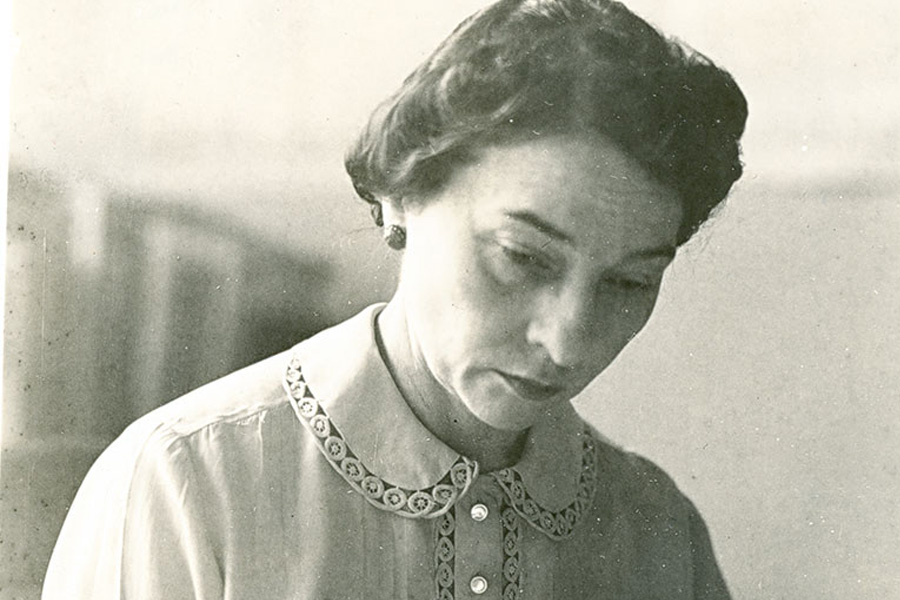
Elizabeth Smith Friedman was a brilliant American intelligence officer. Her existence is a series of shut doors opened by patience, pattern, and nerve. Her skills went beyond codebreaking. She was a method builder, teacher, field pioneer, and lady who proved quiet genius can influence nations.
Born in 1892 in Huntington, Indiana, she was the youngest of nine Quaker children. Background mattered. Her discipline, learning respect, and moral center came from it. Sophia Strock Smith, her mother, is remembered for spelling her daughter’s name unusually. Her father, John Marion Smith, was a dairyman, banker, and politician who straddled practicality and politics. That home produced a daughter who decoded enemy messages, exposed smugglers, and defined a career.
The family circle around Elizabeth Smith Friedman
Elizabeth’s family life was rich, layered, and deeply connected to the arc of her career.
John Marion Smith, her father, appears as the first pillar in her story. He was more than a parent in the background. He represented the strong, civic-minded world that shaped her early years. As a Quaker father, banker, and politician, he belonged to a world of order, public duty, and restraint. That atmosphere seems to echo in Elizabeth’s later work, where calm thought mattered more than noise.
Sophia Strock Smith, her mother, is remembered with equal significance. She is the reason the name Elizabeth became Elizebeth in many records, because she did not want her daughter to be called Eliza. That small choice left a permanent mark, like a signature hidden in the grain of wood. Her mother’s influence also appears in the way Elizabeth carried herself, with intelligence grounded in purpose rather than display.
Elizabeth was the youngest of nine children. That detail matters because large families are laboratories of attention. A youngest child learns how to be observed, how to observe others, and how to read a room quickly. Those skills can become a form of codebreaking long before any cipher machine appears.
Some family names appear in archival photographs and later family material, including sisters named Edna, Ethel, and Lena. These names help sketch the household around her, though the full list of siblings is less consistently preserved in the public record. Even so, the family picture is clear enough to see a busy home, crowded with personalities and rhythms.
William Frederick Friedman was Elizabeth’s husband and professional partner. They married in 1917, and their marriage became one of the great intellectual partnerships in American cryptology. William was trained in science, but Elizabeth was the one who first brought him into the world of codes. Their marriage was not merely domestic. It was a shared engine. They worked side by side at Riverbank Laboratories, later in government service, and finally in the larger history of U.S. intelligence. He became famous, but she was never a shadow. She was a force.
Their children were Barbara Friedman Atchison and John Ramsay Friedman. Barbara carried the family line into the next generation, while John Ramsay is remembered in family material and later accounts as having enlisted in the Air Force. The children grew up in a household where language, secrecy, and state service were not abstractions. They were dinner table weather. They were part of the air.
After William’s death in 1969, Elizabeth devoted herself to preserving his papers and their shared intellectual legacy. That act says a great deal about her character. She was not interested only in cracking other people’s secrets. She also guarded memory. She knew that history can be lost if it is not sorted, labeled, and stored with care.
Career details that changed the field
Elizabeth’s career began in 1916 at Riverbank Laboratories. She had originally gone there through a literary path, working on Shakespeare-related material, but the work soon widened into something far larger. Riverbank became the forge where her talent met an urgent national need.
During World War I, she worked in early American codebreaking efforts and helped train military personnel. At a time when cryptology was still being shaped, she was already helping shape it. That is no small thing. It is like helping invent the compass while already using it to cross a sea.
Her work later moved into government service. She served in Navy and Treasury-related cryptanalytic roles and became especially important during Prohibition. There, she led codebreaking efforts against smugglers. She helped uncover hidden networks, intercept messages, and support prosecutions. The work was painstaking. It demanded long hours, dense transcripts, and a mind able to see structure inside static. She cracked message after message, sometimes in great numbers, helping law enforcement follow the invisible threads of criminal operations.
During World War II, her work shifted again. She became involved in efforts against German espionage networks in South America. Much of this remained classified for years, which meant her public recognition lagged behind her actual impact. That delay is common in intelligence work. The most important names are often the last to be heard.
After the war, she also consulted for the International Monetary Fund and helped establish secure communications systems. This broadened her reach beyond military intelligence and into the architecture of international finance. She was not only solving puzzles. She was helping design trust.
One of her most lasting scholarly achievements was co-authoring The Shakespearean Ciphers Examined. The book tackled the claim that Shakespeare’s works hid secret messages and argued against the Baconian theory. This showed another side of her mind. She was not merely a government cryptanalyst. She was also a careful analyst of evidence, willing to strip away myth and insist on method.
Net worth and public recognition
Wealth did not define Elizabeth Smith Friedman. Service, scholarship, and secrecy built her life. Public net worth estimations don’t matter in her story. Real riches was skill, and inheritance was influence.
Recognition came after the work. Major intelligence and military entities recognized her importance. She was in the Hall of Honor, had facilities named after her and William, and symbolized how women in technical disciplines are sometimes overlooked until history catches up.
A timeline that moves like a lock clicking open
1892, born in Huntington, Indiana.
1915, graduated from Hillsdale College with a degree in English literature.
1916, began work at Riverbank Laboratories.
1917, married William Frederick Friedman.
1917 to 1921, worked in early cryptologic efforts and helped train military personnel.
1920s and 1930s, led codebreaking against smuggling networks during Prohibition.
1940s, worked against wartime espionage and foreign intelligence threats.
1957, co-authored The Shakespearean Ciphers Examined.
1969, William Friedman died.
1971, family papers and photographs were preserved in a major archival collection.
1980, Elizabeth Smith Friedman died in Plainfield, New Jersey.
1999 and beyond, national honors and institutional recognitions continued to grow.
FAQ
Why is Elizabeth Smith Friedman important?
She helped create American cryptology as a practical field. Her work was not theoretical decoration. It solved real problems, from smuggling to wartime espionage, and it shaped how intelligence work was done for decades.
Who were her closest family members?
Her closest family members in the historical record are her parents, John Marion Smith and Sophia Strock Smith, her husband William Frederick Friedman, and her children Barbara Friedman Atchison and John Ramsay Friedman. She was also part of a large family as the youngest of nine children.
What made her marriage unusual?
Her marriage to William Frederick Friedman was also a professional partnership. They influenced each other deeply, worked on related cryptologic problems, and helped define a field together. It was a marriage of minds as much as lives.
Did Elizabeth Smith Friedman become wealthy from her work?
There is no strong public record suggesting that personal wealth defined her life. Her reputation rests on achievement, not fortune. Her legacy is intellectual and institutional rather than financial.
What kind of person was she?
She appears to have been disciplined, exacting, patient, and persistent. Her work required a mind that could hold multiple possibilities at once and a temperament that could endure hours of uncertainty. She was a lantern in a dark room, not because she shouted, but because she stayed lit.
Why do people still talk about her today?
Because her contributions were foundational and because many of them were hidden for years. Modern interest in women in intelligence, cryptography, and science has brought her back into focus. Her story still feels fresh because it combines family, secrecy, intellect, and public service in a rare way.