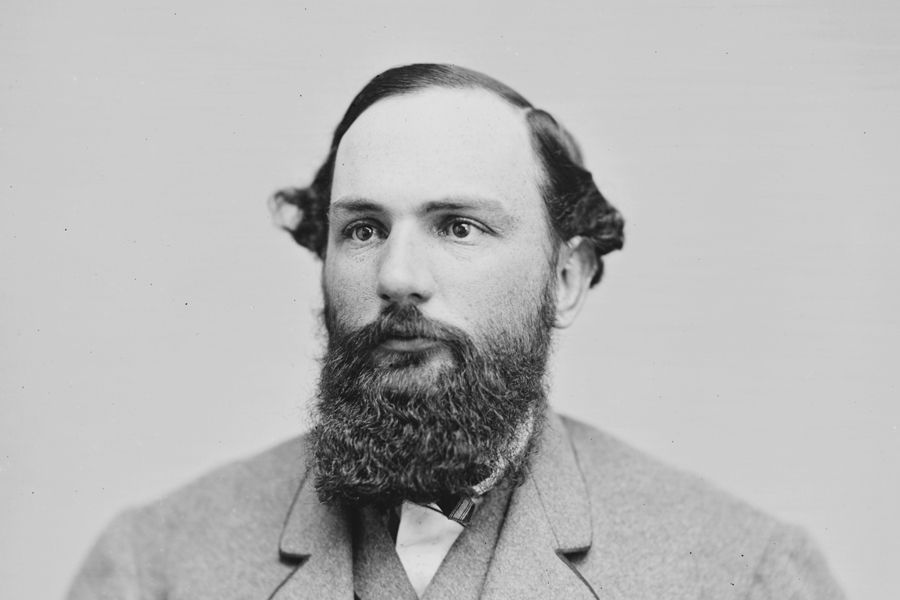
The Man Behind the Initials
When I examine W’s life. I see more than a renowned surname in H. F. Lee. William Henry Fitzhugh Lee, born at Arlington House in Virginia on May 31, 1837, faced war, family history, politics, and the arduous rebuilding of the South after 1865. Most people called him Rooney Lee, which sounds friendlier than the official initials. It suits a guy who lived amid history’s storm and darkness.
The second son of Robert E. Lee and Mary Anna Custis Lee. That paternity alone made him part of one of 19th-century Virginia’s most scrutinized families. Rooney was more than a supporting character. He was a Confederate cavalry general, suffered personal loss and captivity, returned to farming after defeat, and eventually served in the House of Representatives. His existence was like a river, sometimes swift and furious, sometimes peaceful and methodical.
Growing Up at Arlington House
Rooney Lee was born into a household full of memories and expectations. Arlington House was more than a residence. It symbolized inheritance, prestige, and Custis-Washington ties. Rooney was descended from George Washington Parke Custis, George Washington’s adopted grandson, through his mother. He was related to Light-Horse Harry, Revolutionary War cavalryman Henry Lee III, through his father.
I think this setting was crucial. Arlington kids would have absorbed history like air. The house, land, history, and names on every branch of the family tree would have made him feel duty-bound. Pressure can build pride but also limit progress. Public life may have felt like a legacy to Rooney Lee.
Education and the Path to Plantation Life
From 1854 until 1857, Rooney attended Harvard. That fact is important because it placed a Virginia planter’s kid in a top North institution amid a decade of increasing sectional tensions. He returned to Virginia before the Civil War and managed the Lee family’s plantations, including White House.
This period displays a key part of him. Before becoming a military or politician, he worked the land and managed rural areas. He knew animals, farming, and estate management. That was important in the 19th century. Landownership affected politics, identity, and status. Rooney considered the field and stable classes as well as Harvard.
Robert E. Lee and the Weight of a Famous Father
Any W portrait. Rooney was important, but no son of Robert E. Lee could be ignored by H. F. Lee. Born in 1807, Robert Edward Lee was the Confederate Army of Northern Virginia’s commanding general and a controversial American military figure.
One son who vividly represented his father’s martial tradition was Rooney. He joined him in wartime and became a cavalry legend. That attachment seems heavy and anchoring. A parent like Robert E. Lee may inspire loyalty but also tarnish every accomplishment. Rooney was not as famous, but he was distinguished.
Mary Anna Custis Lee and the Custis Inheritance
Another major current entered the family tale through Rooney’s mother, Mary Anna Randolph Custis Lee, born in 1808. She received Arlington House and other Custis property from her father, George Washington Parke Custis. The Lee children were near Virginia memory and early American reputation through her.
Her position was crucial since she connected the family to a genealogy outside the Lees. Soldiers, statesmen, inherited estates, home culture, and family management shaped Rooney’s world. His mother symbolized continuity in a civil war-torn century.
Brothers and Sisters in a Historic Household
The Lee family had seven children who survived infancy, and Rooney grew up among siblings whose lives also touched history.
Former Confederate general George Washington Custis Lee was president of Washington and Lee University. Rob Lee Jr., a Confederate Army veteran, became an author and farmer. Mary Custis Lee, Rooney’s sister, was unmarried and preserved family memory. Young Anne Carter Lee died in 1862 during the war. Eleanor Agnes Lee, known as Agnes, was crucial in maintaining father’s correspondence and archives. After conflict and grief, Mildred Childe Lee, the youngest daughter, helped the family maintain its identity.
When I consider this group, I see a family that functioned almost like a small republic of memory. Some fought, some wrote, some preserved, some endured. Their lives intertwined with the collapse of the Confederacy and the long afterlife of its memory.
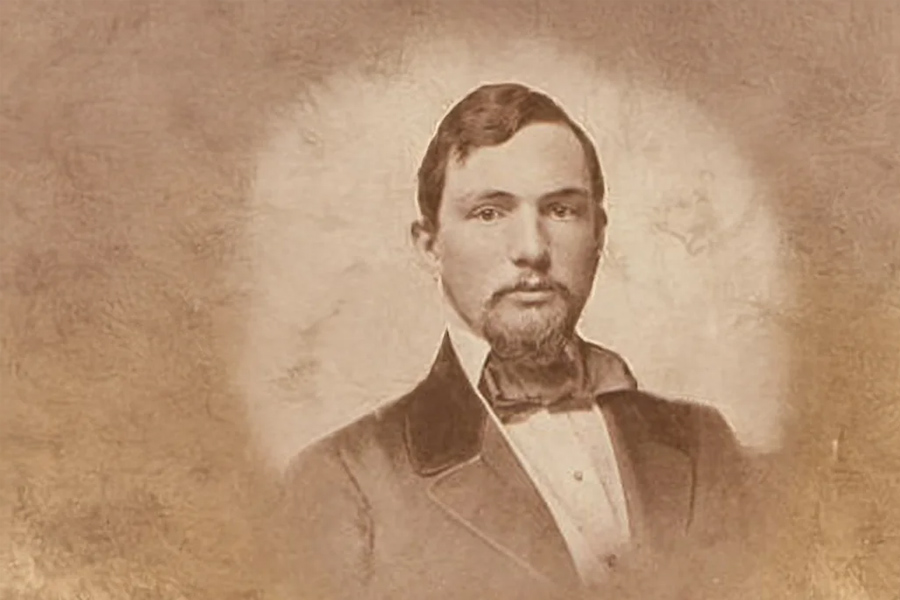
Marriage, Children, and Private Loss
In 1859, Rooney Lee married Charlotte Wickham. They had two children. This marriage linked him with another established Virginia family and seemed to promise a conventional planter’s future. That future was soon torn apart by war.
Charlotte died in 1863 while Rooney was in Union jail. Few facts illustrate Civil War savagery better. A soldier stuck in prison unable to see his dying wife becomes more than a historical figure. He gets achingly familiar.
Rooney later married Mary Tabb Bolling in 1867. That second marriage brought additional children and tied the Lee family to yet another notable Virginia lineage. One of his best known children was George Bolling Lee, who carried the family line into the 20th century.
Cavalry Service in the Civil War
Rooney Lee joined the Confederacy in 1861. He advanced from 9th Virginia Cavalry colonel to major general. He participated in the Peninsula, Chancellorsville, Gettysburg, and Overland campaigns.
Cavalry needed speed, nerve, and adaptability. Cavalry moved like sparks in dry grass, unlike the somber Civil War battlefield image. Scouts, raiders, messengers, flank defenders, pursuers, and cavalrymen could construct a campaign beyond a single fight. Rooney Lee was a skilled horseman and field commander like his father and grandfather.
His capture by Union forces in 1863 drew attention partly because of who he was. The son of Robert E. Lee in Northern custody became a human symbol in a war crowded with symbols. He was later exchanged and returned to service. In 1864, he received promotion to major general.
A Family Tree of Influence
Below is a brief snapshot of key family members connected to W. H. F. Lee:
| Name | Relationship | Notable Role |
|---|---|---|
| Robert E. Lee | Father | Confederate commander |
| Mary Anna Custis Lee | Mother | Heir of Arlington House |
| Henry Lee III | Paternal grandfather | Revolutionary War cavalry leader |
| Anne Hill Carter Lee | Paternal grandmother | Member of a distinguished Virginia family |
| George Washington Parke Custis | Maternal grandfather | Builder of Arlington House |
| Mary Lee Fitzhugh Custis | Maternal grandmother | Custis and Fitzhugh family matriarch |
| George Washington Custis Lee | Brother | Confederate general, university president |
| Robert E. Lee Jr. | Brother | Soldier, writer, farmer |
| Charlotte Wickham Lee | First wife | Mother of two of his children |
| Mary Tabb Bolling Lee | Second wife | Mother of additional children |
| George Bolling Lee | Son | Continued the family line |
Politics After the Confederacy
After 1865, Rooney farmed and gradually returned to public life. One of his most interesting chapters is his postwar life. Many only know him as a Confederate officer, but his latter career reveals how former Confederate elites reconstituted themselves in American politics.
He was a Virginia senator and US representative from 1887 to 1891. That final role stands out. A former enemy of the US became a Virginia congressman. The arc is dramatic and sarcastic, yet it was part of post-Reconstruction American politics.
His political interests centered largely on agriculture and Virginia affairs, which makes sense given his background. He remained, at heart, a man formed by land, region, and inherited responsibility.
Wealth, Land, and the Limits of Measurement
No current Rooney Lee net worth is known. The categories don’t work across centuries. At various times, he owned land, livestock, plantation assets, and family property. However, the Civil War destroyed many Southern families’ finances, including the Lees.
I prefer to view his fortune as a dynamic mix of land, prestige, labor systems, and broken inheritance. The soil held social power in the antebellum South. That soil survived after the war, but its old order had crumbled.
Rooney Lee’s Final Years
From 1887 to 1891, Rooney served in Congress, one of the last chapters in a life marked by upheaval. He died on October 15, 1891, in Alexandria, Virginia, at age 54.
His life saw the US ripped apart and painstakingly reconstructed. He was born into immense privilege, served in a civil war under one of America’s most famous leaders, endured personal sorrow, rebuilt his public life, and died as a congressman. Even without the familial constellation, that is a tremendous voyage.
FAQ
Who was W. H. F. Lee?
W. H. F. Lee was William Henry Fitzhugh Lee, born on May 31, 1837, and died on October 15, 1891. He was the second son of Robert E. Lee and Mary Anna Custis Lee, a Confederate cavalry general during the Civil War, a planter, and later a U.S. Congressman from Virginia.
Why was he called Rooney Lee?
He was widely known by the nickname Rooney Lee among family members, friends, and military associates. The nickname became the more familiar name by which many people remembered him.
He was Robert E. Lee’s second son. Their relationship tied Rooney closely to the military tradition of the Lee family, and he followed his father into Confederate service during the Civil War.
Who were W. H. F. Lee’s parents?
His father was Robert Edward Lee, the Confederate commander, and his mother was Mary Anna Randolph Custis Lee, heir to Arlington House and daughter of George Washington Parke Custis.
Did W. H. F. Lee have notable siblings?
Yes. The Confederate commander and Washington and Lee University president was his brother George Washington Custis Lee. Robert E. Lee Jr., his brother, was a Confederate Army soldier and subsequently a novelist and farmer. His sisters also helped preserve family history.
Who were his wives?
He first married Charlotte Wickham in 1859. After her death in 1863, he married Mary Tabb Bolling in 1867.
Did W. H. F. Lee have children?
Yes. He had children through both of his marriages. One of the most notable was George Bolling Lee, who continued the family line into the next century.
What did W. H. F. Lee do in the Civil War?
He joined the Confederate Army in 1861, became colonel of the 9th Virginia Cavalry, fought in several major campaigns, was captured by Union forces in 1863, and rose to the rank of major general in 1864.
What did he do after the war?
After the Civil War, he returned to agricultural life and later entered politics. He served in the Virginia Senate and then in the U.S. House of Representatives from 1887 to 1891.
Why does W. H. F. Lee still attract attention today?
He remains historically significant because he was both an important Confederate cavalry officer and a member of one of America’s most famous families. His life also helps illuminate larger themes of war, memory, class, family inheritance, and political reintegration after 1865.