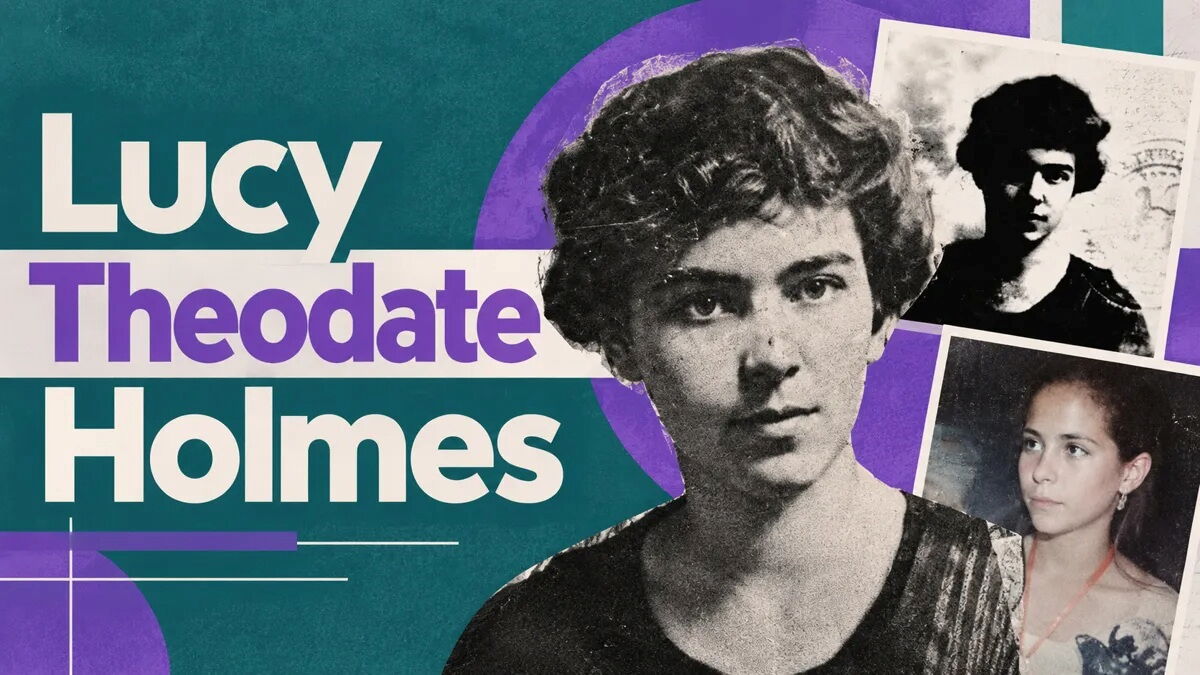
Basic Information
| Field | Details |
|---|---|
| Full Name | Lucy Theodate Holmes (later Hunter; later Moss) |
| Birth | July 4, 1889 |
| Birthplace | Englewood, Chicago, Illinois |
| Death | December 29, 1956 |
| Place of Death | Los Angeles, California |
| Occupations | Public school teacher, educational administrator, wartime volunteer |
| Notable Wartime Work | Red Cross organizer, YMCA volunteer in France (1918) |
| Parents | Father: Herman Webster Mudgett (H.H. Holmes); Mother: Myrta Z. Belknap |
| Siblings | Half-brother: Robert Lovering Mudgett |
| Marriages | James Douglas Hunter (m. 1919, div. 1923); John Thomas Moss (m. 1927) |
| Children | Ronald Douglas Hunter (born and died December 25, 1919); possible additional children unconfirmed |
| Key Residences | Wilmette (IL), Duluth (MN), Santa Monica/Los Angeles (CA) |
| Interment | Ashes interred at Woodlawn Cemetery, Santa Monica, California |
A Life Lived Between Headlines and Quiet Heroics
Lucy Theodate Holmes came into the world on Independence Day, 1889, in Chicago’s Englewood neighborhood, the child of America’s most infamous nineteenth-century swindler-turned-serial killer and a music teacher who prized dignity and order. Her father, known to history as H.H. Holmes, was arrested when she was still a child and executed in 1896. In the public imagination, Lucy hovered like a footnote—yet her life tells a different story: one of persistence, service, and the careful construction of a private identity in the long, cold shadow of notoriety.
As a girl, Lucy moved with her mother, Myrta Z. Belknap, to Wilmette, Illinois, where maternal relatives buffered the scandal’s aftershocks. In 1896, at age seven, she wrote a tender farewell letter to the father she barely knew, a brief, heartbreaking moment that drifted across newspapers and leapt into the nation’s conscience. After that, the noise receded. She pursued schooling, grew into an educator, and turned her energies outward—toward classrooms, immigrants, and communities finding their footing.
Education and Wartime Service
By the early 1910s, Lucy and her mother were living in Duluth, Minnesota. There, she joined the rural county school system, teaching and shouldering administrative duties. Her work threaded civic responsibility with creativity; in 1917, she authored a short play, “Cementing Home Ties,” to encourage immigrant participation in wartime efforts—a call to unity fashioned for town halls and parish basements where the everyday work of patriotism was done.
The following year brought international horizons. In 1918, Lucy secured a passport and traveled to France under the banner of wartime volunteerism, working with the YMCA and allied organizations to teach, aid, and organize in communities touched by the First World War. These months provided a counterpoint to her childhood: where subterfuge had once defined her father’s world, Lucy stitched together purpose in the open air. Her name surfaced then not for scandal but for service.
Marriages, Motherhood, and Loss
In 1919, Lucy married James Douglas Hunter—an engineer—while abroad or shortly after returning. A son, Ronald Douglas Hunter, was born on December 25, 1919, but lived only forty-five minutes. The loss, stark and immediate, marked her like a winter frost. Lucy and James divorced in 1923.
Four years later, on June 27, 1927, she married John Thomas Moss, a Canadian. The union endured about nine years, with the couple separating by 1936 after a trip to Europe had failed to heal their rift. Moss died in 1937; Lucy handled arrangements and later had her ashes interred with his in Santa Monica. Genealogical hints suggest the possibility of other children from her second marriage, though the records remain incomplete and unconfirmed.
California Years and Passing
By 1940, Lucy was living in Santa Monica with her maternal uncle, John Smith Belknap. She continued to teach, to manage her affairs quietly, and to keep family close. The tracery of her public life thinned as the decades passed. She died in Los Angeles on December 29, 1956, at age 67. In the end, the woman who began life beneath a storm of headlines left a footprint composed of school ledgers, wartime rosters, and local notices of modest distinction.
Family Ties and Ancestry
Lucy’s family map spread from New England fields to Midwestern main streets. Her paternal line anchored in Gilmanton, New Hampshire, among farmers and tradesmen. Her maternal relatives, including her grandparents David N. Belknap and Lucy Thyrza Beers, offered stability when Lucy needed it most, providing a duplex-side upbringing in Wilmette that softened the upheaval of her early childhood.
Her half-brother, Robert Lovering Mudgett, born in 1880 to Holmes and his first wife, Clara Lovering, lived an unobtrusive life as an accountant. Whether Lucy and Robert maintained ties is unclear; silence, here, may well be its own testament to the ruptures Holmes induced.
Family Snapshot
| Name | Relation | Lifespan | Notes |
|---|---|---|---|
| Herman Webster Mudgett (H.H. Holmes) | Father | 1861–1896 | Serial killer; executed in 1896; the source of Lucy’s unwanted fame. |
| Myrta Z. Belknap | Mother | 1862–1924 | Music teacher; raised Lucy with support from maternal relatives. |
| Robert Lovering Mudgett | Half-brother | 1880–1956 | Accountant; lived largely out of the public eye. |
| James Douglas Hunter | First husband | b. 1885 | Married 1919; divorced 1923. |
| Ronald Douglas Hunter | Son | 1919–1919 | Born and died December 25, 1919. |
| John Thomas Moss | Second husband | b. 1880, d. 1937 | Married 1927; separated by 1936; Lucy’s ashes interred with him. |
| Levi Horton Mudgett | Paternal grandfather | 1827–1911 | Farmer and postmaster in New Hampshire. |
| Theodate Page Price | Paternal grandmother | 1827–1903 | Lucy’s middle name honors this grandmother. |
| David N. Belknap | Maternal grandfather | 1834–1909 | Merchant; central in Lucy’s Wilmette upbringing. |
| Lucy Thyrza Beers | Maternal grandmother | 1837–1913 | Part of the stabilizing family circle in Illinois. |
Timeline Highlights
| Year/Date | Event | Place | Notes |
|---|---|---|---|
| July 4, 1889 | Birth of Lucy | Englewood, Chicago | Born amid the growing infamy of her father. |
| 1894–1895 | Height of Holmes’s crimes | Chicago | Lucy and Myrta live apart from the chaos in Wilmette. |
| 1896 | Farewell letter; father’s execution | Philadelphia | Lucy writes to Holmes; execution follows. |
| ~1913 | Move to Duluth | Duluth, MN | Lucy begins rural teaching and administrative duties. |
| Dec 16, 1917 | Wartime play published | Duluth | “Cementing Home Ties” promotes immigrant engagement. |
| 1918 | Overseas volunteer work | France | Passport secured; serves in education and relief efforts. |
| May 15, 1919 | First marriage | France/US | Weds James D. Hunter; wartime era relationship. |
| Dec 25, 1919 | Birth and death of son | Kalamazoo, MI | Ronald lives 45 minutes; a profound personal loss. |
| Nov 24, 1923 | Divorce from Hunter | — | Marriage ends; Lucy returns to professional life. |
| May 28, 1924 | Death of mother | Michigan | Myrta’s passing; Lucy loses her closest anchor. |
| June 27, 1927 | Second marriage | — | Weds John T. Moss; relationship lasts nearly a decade. |
| 1936 | Separation from Moss | Europe/US | Travel fails to reconcile; separation follows. |
| 1937 | Death of Moss | Santa Monica, CA | Lucy oversees burial; later joins him in interment. |
| 1940 | Census residence | Santa Monica, CA | Living with maternal uncle; teaching continues. |
| Dec 29, 1956 | Death of Lucy | Los Angeles, CA | Dies at 67; ashes placed at Woodlawn Cemetery. |
Media Echoes and Modern Mentions
Lucy’s name resurfaces periodically in history forums, genealogy circles, and social conversations about H.H. Holmes. She is often referenced in documentaries and summaries of her father’s crimes, typically as a footnote rather than the subject. New developments about her life remain rare, and most modern interest focuses on the broader Holmes saga rather than Lucy’s personal story of resilience, education, and wartime contribution.
The Measured Distance from Infamy
The arc of Lucy Theodate Holmes’s life illustrates the quiet art of setting boundaries between past and present. She did not renounce her surname, but she refused to let it write her future. Instead, she taught, organized, wrote, traveled, grieved, and carried on—a measured, steady cadence of civic-minded living. Where her father’s story is a tangle of deceit and death, hers is tempered, practical, and humane. She walked away from a family conflagration and chose the long route through service.
FAQ
Who was Lucy Theodate Holmes?
She was the daughter of H.H. Holmes who built a life in education and wartime service, largely apart from her father’s notoriety.
When and where was she born?
She was born on July 4, 1889, in Englewood, Chicago, Illinois.
What did she do during World War I?
She volunteered overseas in France in 1918, working in education and relief efforts, and helped organize Red Cross initiatives at home.
Did Lucy have children?
She had a son, Ronald Douglas Hunter, who was born and died on December 25, 1919; other children are only speculated in some records.
Who were her husbands?
She married James Douglas Hunter in 1919 and later John Thomas Moss in 1927.
Where did she live later in life?
She settled in California, residing in Santa Monica and Los Angeles during the 1940s and 1950s.
How did she relate to her father’s legacy?
She kept a deliberate distance, focusing on teaching and community work rather than the infamy attached to her surname.
Where is she interred?
Her ashes are interred at Woodlawn Cemetery in Santa Monica, California.